


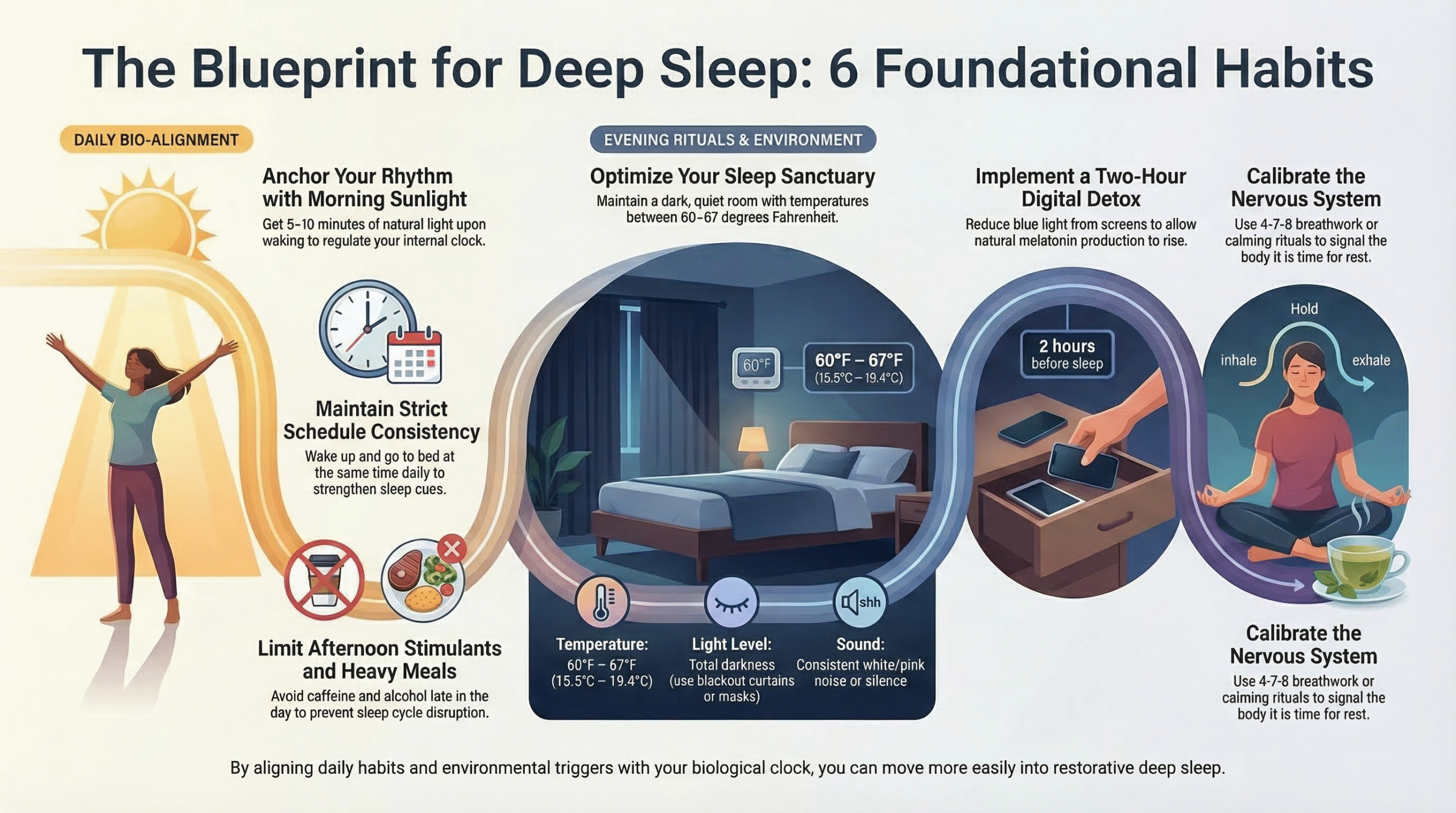
Deep sleep is essential for restoring your body and mind. During deep sleep, your body repairs tissues, balances hormones, strengthens immunity, and restores energy. Yet many people struggle to get enough deep sleep consistently. Modern life, with artificial light, stress, and irregular schedules, can disrupt your natural sleep rhythms.
The good news: supporting your deep sleep often comes down to simple, intentional daily habits. When your routines, environment, and lifestyle align with your biology, your body can more easily move into restorative sleep. Here are 10 foundational habits to improve deep sleep naturally.
1. Get Morning Sunlight

Exposure to natural sunlight early in the morning helps regulate your circadian rhythm, signaling your body that it’s time to wake. This rhythm also cues melatonin release later, preparing you for deep sleep. Even 5–10 minutes of morning sunlight can strengthen your sleep-wake cycle and improve sleep quality.
2. Keep a Consistent Sleep Schedule

Going to bed and waking up at the same time daily helps your body anticipate sleep and wake times. Even on weekends, try to maintain consistency. This strengthens your natural rhythm, making it easier to fall into deep sleep naturally.
3. Reduce Evening Blue Light

Artificial light from screens suppresses melatonin, making it harder to fall asleep and reach deep sleep. Dim lights and reduce phone, TV, or laptop use 1–2 hours before bed to support your natural sleep cycle.
4. Keep Your Bedroom Cool

A slightly cool bedroom helps your body naturally lower its temperature for sleep. Aim for 60–67°F (15.5–19.4°C) to ease the transition into deep sleep and stay in restorative sleep cycles longer.
5. Avoid Late Stimulants

Caffeine, alcohol, and heavy meals late in the day can disrupt deep sleep. Limit caffeine in the afternoon and finish dinner at least 2–3 hours before bed to allow your body to prepare for restorative sleep.
6. Create a Calming Evening Routine

Wind down each evening with relaxing activities like reading, stretching, journaling, or a warm bath. A consistent bedtime ritual signals your nervous system to shift into sleep mode, supporting deeper rest.
7. Support Sleep With Nutrients

Magnesium and glycine support relaxation and stable nighttime body temperature. Including these nutrients in your diet or through supplements can enhance the body’s natural mechanisms for deep, restorative sleep.
8. Practice Evening Breathwork

Slow, controlled breathing before bed activates the parasympathetic nervous system, promoting relaxation. Techniques like box breathing or 4-7-8 breathing calm the mind and help your body transition into deep sleep more easily.
9. Make Your Bedroom Dark

Darkness signals your brain to release melatonin, essential for deep sleep. Blackout curtains, sleep masks, or covering electronics can help create a sleep-friendly environment.
10. Use Consistent Sound

Sudden noises disrupt sleep cycles. White noise, pink noise, or a simple fan can provide a consistent background sound to help your brain stay in deeper sleep stages throughout the night.
Final Thoughts
Deep sleep is supported by many small, intentional habits throughout your day. Morning sunlight, consistent routines, calming evening rituals, and a supportive sleep environment all work together to guide your body toward restorative sleep. Improving deep sleep enhances energy, focus, mood, and overall health.
Disclaimer: This information is for educational purposes only and is not intended to diagnose, treat, cure, or prevent any disease. Always consult your healthcare provider before making significant changes to your diet or lifestyle, especially if you have medical conditions or take medications.
Scientific References
- Wright, K. P., Jr., et al. (2005). Advancing human circadian rhythms with morning bright light and melatonin. PubMed: https://pubmed.ncbi.nlm.nih.gov/16263827/
- Abbasi, B., et al. (2012). The effect of magnesium supplementation on primary insomnia in elderly: A double-blind placebo-controlled clinical trial. PubMed: https://pubmed.ncbi.nlm.nih.gov/23853635/
- Bannai, M., & Kawai, N. (2012). New therapeutic strategy for amino acid medicine: glycine improves sleep quality. PubMed: https://pubmed.ncbi.nlm.nih.gov/22293292/
- Jerath, R., et al. (2015). Physiology of long pranayamic breathing: Neural respiratory elements may provide a mechanism that explains how slow deep breathing shifts the autonomic nervous system. PubMed: https://pubmed.ncbi.nlm.nih.gov/26223939/
- Harding, E. C., Franks, N. P., & Wisden, W. (2019). The temperature dependence of sleep. PubMed: https://pubmed.ncbi.nlm.nih.gov/31289281/


+ show Comments
- Hide Comments
add a comment